Assimilasjon: A Simple, Deep Guide With Clear Examples
Assimilasjon: Meaning, Types, Examples and Real-Life Impact
Assimilasjon is a word you will see in topics about culture, language sounds, and even learning. The core idea is simple: something becomes more similar to something bigger. This page explains assimilasjon in clear language, with real moments that feel familiar, not textbook. You will also get a detailed comparison table and helpful FAQs that answer the questions people usually search for first.
What “assimilasjon” means in simple English
Assimilasjon means becoming more similar, or being absorbed into something larger. That single idea shows up in a few different areas. In society, assimilasjon often talks about a minority group changing to match the majority culture. In language, assimilasjon explains why sounds shift when people speak fast. In learning, assimilasjon describes how the mind fits new information into what it already knows. The same word can feel light in one topic and heavy in another, so the surrounding context matters. Once you learn the three main uses, reading gets easier and your notes become clearer.
Assimilasjon in society: culture, power, and pressure
In social topics, assimilasjon often describes a strong push toward sameness. A person may feel they must change their language, habits, or traditions to be accepted. This is different from simple “blending in” for fun. Pressure can come from school rules, workplace expectations, or social reactions. A child may stop using a home language in public. A family may avoid cultural food or clothing because it draws attention. Some people choose these changes and feel good about them. Others feel a quiet loss. When you read the word in society debates, it often connects to identity, fairness, and belonging.
Assimilasjon vs integration: a quick, clear difference
People mix up assimilasjon and integration. The difference becomes clear with daily examples. Integration means joining the wider society while still keeping important parts of your own culture. Assimilasjon moves closer to “become the same as the majority.” A student can speak English at school and a home language at home and still feel respected. That feels like integration. If the same student is pushed to drop the home language completely, that leans into assimilasjon. In real life, many people live between these two ideas. They keep some traditions and leave others behind, based on comfort, safety, and goals.
Assimilasjon in language: why sounds change in speech
In language studies, assimilasjon describes how one sound becomes more like a nearby sound. Speech is fast, and the mouth likes easier movement. So a sound can shift because of the sound next to it. You may hear this in English and not notice it. Many words sound slightly different in quick talk than in careful pronunciation. That is normal, not a mistake. For Norwegian learners, assimilasjon can explain why real conversation sounds different from slow practice audio. Once you expect these patterns, listening feels less confusing and your own pronunciation often becomes smoother.
Common types of sound assimilasjon you may notice
Sound assimilasjon can happen in different ways. Sometimes the first sound changes to match what comes next. Sometimes a sound changes because of what came before it. It can be a small change, or the sound can become almost the same as its neighbor. You do not need advanced linguistics to use this idea. Think of it as “sounds copying nearby sounds” in fast speech. This also explains why subtitles can look different from what your ear hears. Writing stays stable, but speech bends. If you study pronunciation, this topic is a simple shortcut to better listening skills and more natural speaking.
Assimilasjon in learning: how the mind fits new ideas
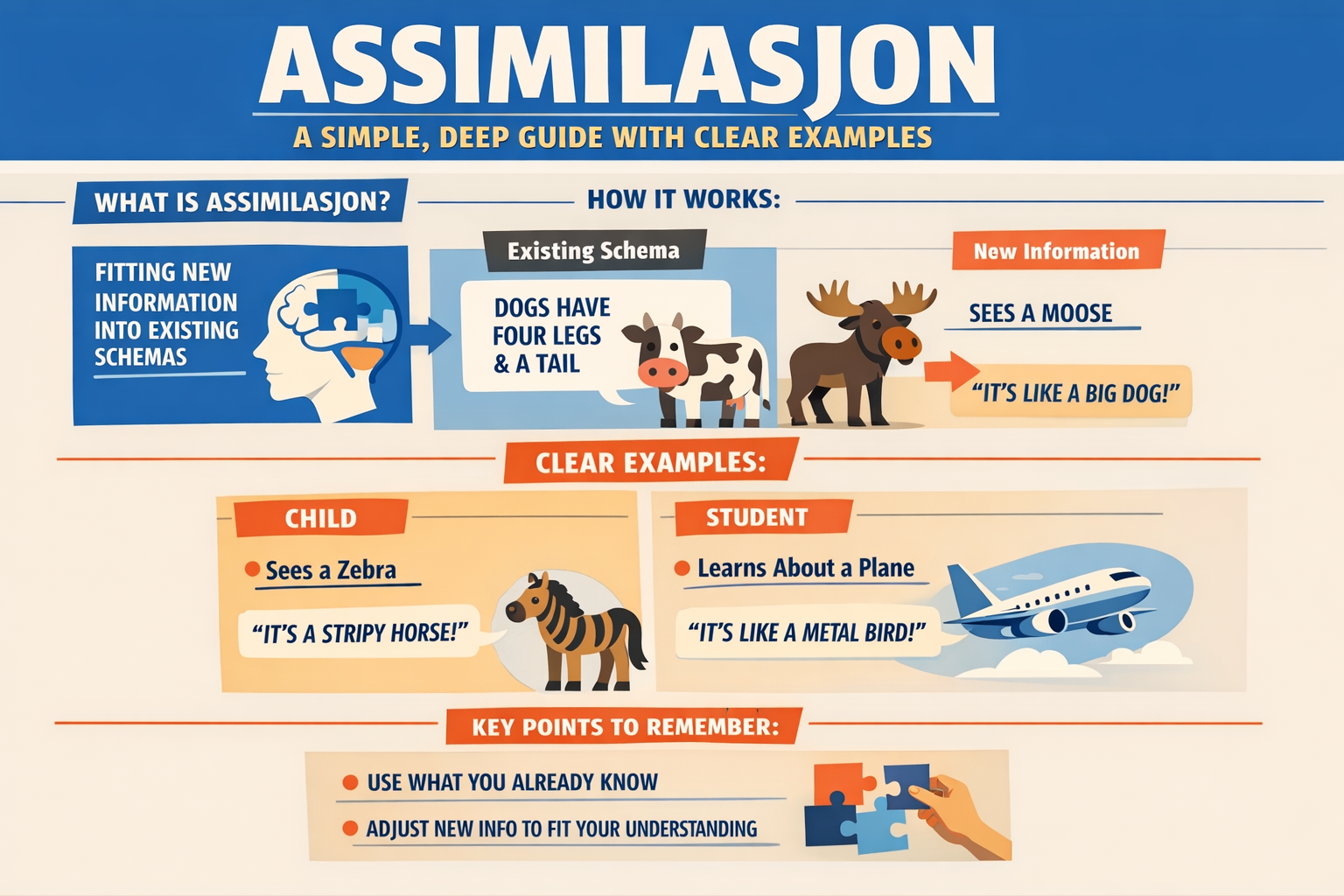
In learning theory, assimilasjon describes a simple habit of the human mind. We meet something new and connect it to what we already know. A child who knows dogs may call a wolf a “dog” at first. The child is using an old mental box for a new thing. Later, the child learns the difference and builds a better mental box. That later step is a different process, but assimilasjon is the early “fit it into what I know” move. This meaning is calm and practical. It is not about culture pressure. It is about how understanding grows through small steps.
A real-life story: moving and feeling assimilasjon
Imagine a teen moving to the USA with family. At home, the teen speaks the family language. At school, the teen speaks English. At first, the teen enjoys both worlds. Then jokes start. A teacher misreads the name. Friends ask the teen to “talk normal.” The teen begins to avoid the home language in public. The teen stops bringing cultural food to school. Over time, life feels easier, but something also feels missing. This is how assimilasjon can show up without any official rule. Social reactions can shape choices. Some people later return to old traditions with pride. Others keep the new path.
When assimilasjon feels helpful, and when it hurts
Assimilasjon is not always described as negative in every situation. Some people choose major changes and feel happy doing it. They may want one shared language at home, or a new start with fewer labels. Choice makes a huge difference. The harm grows when choice is missing. Pressure can create shame. Shame can create silence. Silence can break family bonds and confidence. In schools, children may feel their home life is treated as less valuable. In society, forced sameness can erase stories and identity. A fair way to think about assimilasjon is to ask two questions. Who holds the power here? Who gets to decide what stays and what changes?
Detailed table: how assimilasjon changes by field
The same word can mean different things depending on the topic. This table keeps everything clear, so you can understand the meaning fast when you see assimilasjon in a new article or discussion.
| Field | Meaning of assimilasjon | Simple picture | Real-life angle |
|---|---|---|---|
| Society | People change to match a larger culture | “Become the same” | Language loss, identity pressure, social acceptance |
| Language | One sound becomes more like a nearby sound | “Sounds copy neighbors” | Fast speech shifts pronunciation in normal talk |
| Learning | New ideas fit into what the mind already knows | “Fit new into old” | Kids label new things using known categories |
| Reading skill | Context decides which meaning is intended | “Spot the topic first” | Look for culture words, sound words, or learning words |
| Everyday use | General idea of becoming similar or absorbed | “Blend into a bigger whole” | Used in casual explanations and summaries |
How to spot the right meaning in seconds
You can usually identify the meaning of assimilasjon fast by looking at nearby words. If you see topics about immigration, identity, minority groups, or policy, it is probably the society meaning. If you see words about consonants, vowels, speech, or pronunciation, it is the language meaning. If you see words about children, development, or learning, it is the learning meaning. Also watch the tone. Social writing can feel emotional or political. Language writing is more technical. Learning writing often uses child-based examples. This one small habit prevents confusion and makes your writing and reading cleaner. It also helps you explain the word to someone else without sounding unsure.
Common myths people believe about assimilasjon
One myth is that assimilasjon is always a personal choice. Many times it is shaped by pressure and power. Another myth is that assimilasjon and integration are the same. They can lead to very different feelings and outcomes. Some people also think sound assimilasjon is “wrong speech.” It is a normal speech pattern. Another myth is that assimilasjon means a person forgets every part of the past. Real life is not that clean. People keep some parts and change others. Finally, many assume assimilasjon ends after one generation. It can shift across many years, with people returning to language and traditions later in life.
How to talk about assimilasjon with respect
When you write about assimilasjon, your tone matters. Readers can feel judged fast. Use calm, clear words and focus on real experience. Avoid blaming people for choices made under stress. If you discuss policy, name both the goal and the cost. If you discuss language, keep it practical and easy to follow. If you discuss learning, use child-friendly examples that make sense in daily life. Also remember that one word can carry history. In the USA, immigration stories can feel personal. When you treat the topic with care, readers feel safe and understood. That builds trust and keeps people reading.
Conclusion: make assimilasjon clear, not confusing
Assimilasjon is a small word with big meaning. It can describe cultural change, sound change, or learning change. The key is context. Once you know the topic, the meaning becomes simple. If you are reading Norwegian texts, this knowledge helps you understand faster and take cleaner notes. If you are writing about society, it helps you speak with fairness. If you are learning pronunciation, it helps you hear speech as natural. If you are thinking about child learning, it gives you a simple way to explain growth. If this guide helped you, share it with a friend who studies language or culture, or use it as a reference when the word assimilasjon appears in your next reading.
FAQs about assimilasjon
These questions cover what people usually search when they see assimilasjon for the first time. Each answer is written in simple English and stays focused on clarity.














Post Comment